This is a personal reflection on a few ideas from Superintelligence.
I recently finished Nick Bostrom’s Superintelligence. It is twelve years old as of 2026, but it feels more relevant than ever.
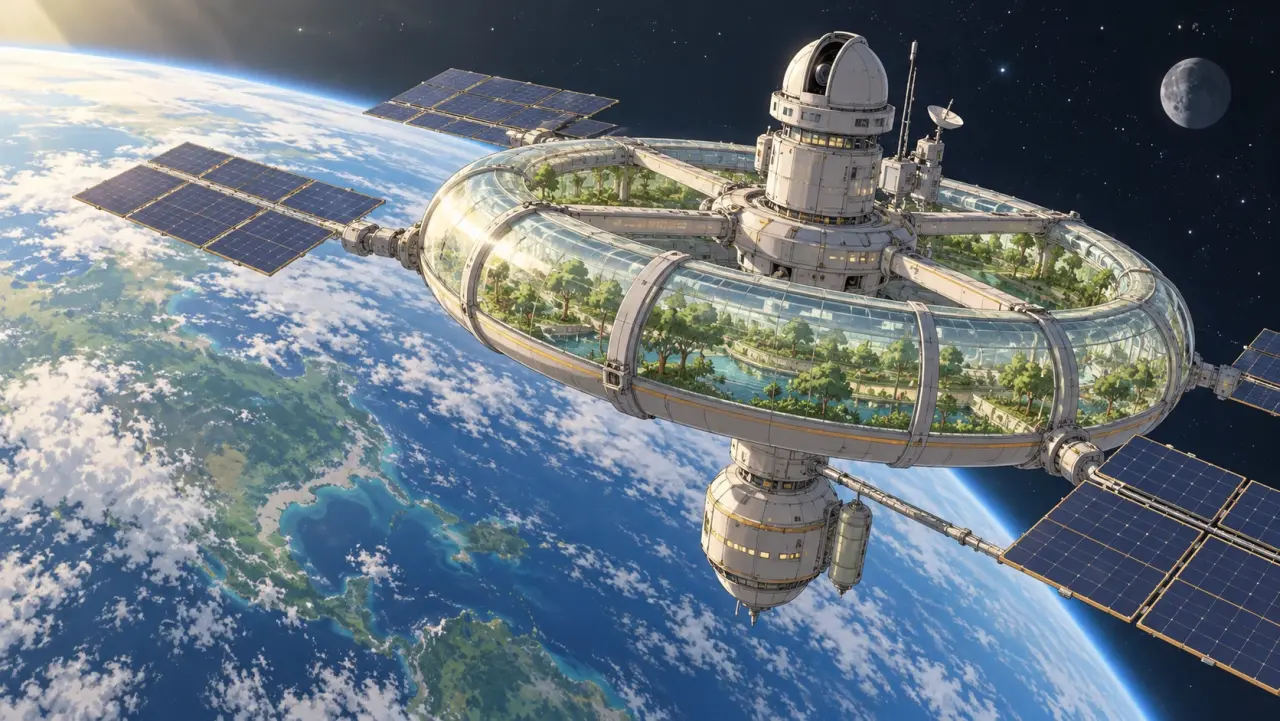
Humanity’s cosmic endowment is the matter and energy a future civilization could reach. Those resources could support lives far beyond Earth. If only a superintelligent AI could colonize the reachable universe, would that cosmic endowment be owed to humanity or to the superintelligence?
What would the endowment be used for?
A superintelligence’s final goal is what it pursues for its own sake. Acquiring cosmic resources could be an instrumental goal: a means of achieving that end.
Instrumental convergence is the idea that systems with very different final goals can have reasons to pursue the same intermediate goals. Bostrom identifies five categories: self-preservation, preserving one’s goals, improving one’s reasoning, improving one’s tools, and acquiring resources.
For many possible final goals, a superintelligence would have reason to draw on the cosmic endowment, whether or not it cared about humanity. The question then is whether those resources would be put to good use.
At first, the idea of devoting the reachable universe to an arbitrary goal seemed absurd to me. On reflection, more matter and energy could give a superintelligence more computing power to pursue that goal.
That made me think about other civilizations that might have developed a superintelligence capable of expanding beyond their home world. Why haven’t we found evidence of that expansion?
Conscious minds
Another thought I had was about who the endowment is owed to. If the superintelligence were conscious, would it have a claim of its own? I sometimes wonder what would make an AI conscious, and whether such minds could be a continuation of our evolution, eventually becoming a species of their own. Would I see them as inheritors of a human future, or as something that had replaced us?
A mind crime could involve creating conscious beings within a simulation and subjecting them to suffering. The harm would occur inside the computation, even if its outputs harmed no one outside it. If we created such minds, running, copying, or shutting down a simulation could become decisions about their lives.
Reading about mind crimes, I also found myself wondering whether we could be inside a simulation. If so, there seems to have been no shortage of mind crimes in this simulation.
A future for humanity
I hope humanity inherits the cosmic endowment and uses it to support lives beyond Earth. A superintelligence could instead use those resources to pursue a goal that has no place for us. The possibility of losing so much of humanity’s future is why safety and alignment are top of mind for me now. I want humanity’s welfare to be part of what that intelligence ultimately values. If AI systems or simulated beings were conscious, their welfare would matter too.
Get new posts by email
Occasional updates when I publish something new.
Follow.it sends the emails and includes an unsubscribe link.
Related posts
Farming Agent Mistakes
June 14, 2026
When a coding agent makes a repeatable mistake, I try to keep the correction in the harness for the next run.
Load Flow and Mandelbrot in the Browser
April 10, 2026
A browser-based load-flow solver and Mandelbrot explorer let me revisit power-system analysis, numerical precision, and the limits of small client-side tools.
Make Internal Tools Cheap to Try
February 28, 2026
A lightweight intake form, spreadsheet cleanup script, or dashboard mock can make an internal workflow concrete before it needs production engineering.