
For AI-assisted coding tasks, I now write a short brief, review a plan before implementation, and run build, lint, and tests at each checkpoint.
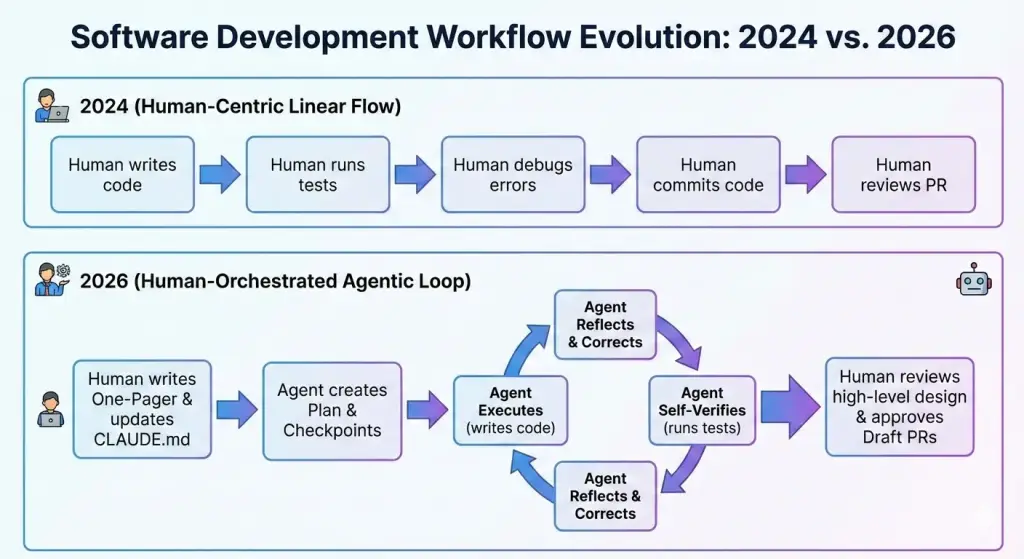
In early 2024, I used AI mostly for autocomplete-level work: snippets, error explanations, and small refactors. By 2026, I was using agents for larger tasks. I still write code when needed, but more of my attention now goes to constraints, review, and the edge cases the tools miss.
Quick implementation stopped scaling
I started experimenting with Cline for straightforward tasks such as boilerplate, test scaffolding, and repetitive refactors. I avoided giving it larger tasks for two reasons. First, it was easy to get code that looked fine but was wrong in non-obvious ways. Second, anything non-trivial took too much prompt back-and-forth.
In 2025, I switched to Claude Code and stopped asking for immediate implementation. Instead, I asked for a plan first and reviewed it.
Plans were often overbuilt for the actual problem, and the agent would report "done" before handling edge cases. Reviewing the plan and running the checks became necessary parts of the task.
Repository context and a repeatable loop
A lot of bad output came from missing repository context, so I keep project expectations in CLAUDE.md. Every session starts with the same baseline: architecture preferences, testing requirements, and coding conventions.
I also replaced one-pass execution with a repeatable loop:
- Plan
- Implement
- Verify with build/lint/tests
- Reflect and continue if needed
I often split the work into planning and implementation passes. In practice, that means I write a short feature brief with constraints and non-goals, turn that into checkpoints, let the implementation run through the loop per checkpoint, and then review design and risk rather than just syntax.
Example brief:
Add Google OAuth using existing
AuthService. Store tokens in Redis, not SQL.
Costs and limits
The workflow has clear costs:
- Cost: Frequent tool calls and retries add up quickly.
- Legacy code friction: Agents struggle when systems rely on undocumented history.
- Less hands-on coding: I type less code directly than I used to.
The diagram below is illustrative; the areas are not measured proportions.
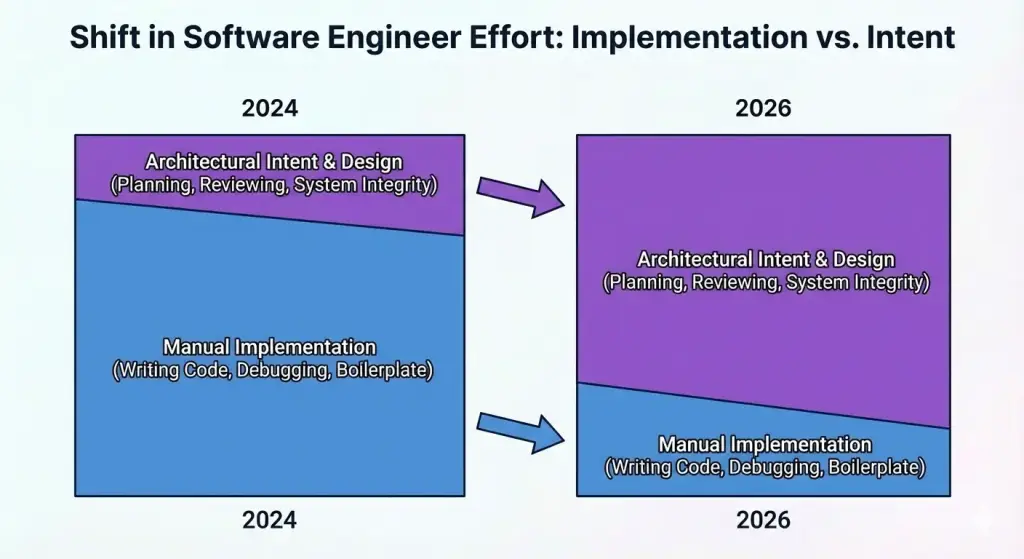
The limit I have not solved is attention. Implementation can run in parallel, but review and coordination still funnel back through me.
Get new posts by email
Occasional updates when I publish something new.
Follow.it sends the emails and includes an unsubscribe link.
Related posts
Farming Agent Mistakes
June 14, 2026
When a coding agent makes a repeatable mistake, I try to keep the correction in the harness for the next run.
Make Internal Tools Cheap to Try
February 28, 2026
A lightweight intake form, spreadsheet cleanup script, or dashboard mock can make an internal workflow concrete before it needs production engineering.
Codex for Site Edits, Sora for Visual Sketches
February 22, 2026
Codex helps me make small site edits from my phone; Sora remains a way to test visual directions before I know whether they belong.